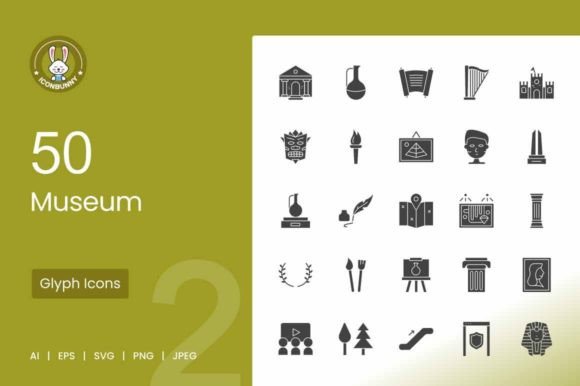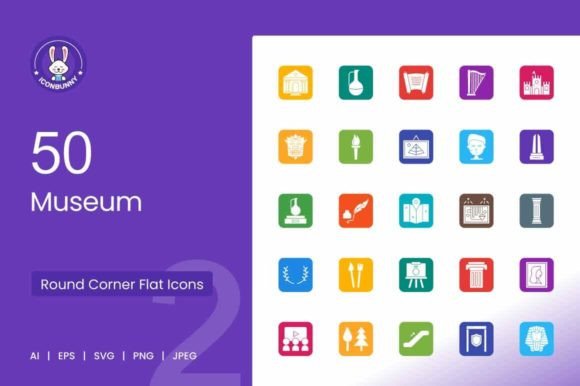
50 Museum Filled Round Corner Icons: The Ultimate Visual Toolkit for Cultural Design
In the digital age, visual communication is paramount. Whether you are designing a mobile application for a local art gallery or creating an educational presentation about ancient history, the right imagery can make the difference between a confusing interface and an intuitive user experience. This is where 50 Museum Filled Round Corner Icons becomes an essential resource for designers, developers, and content creators. This collection offers more than just simple graphics; it provides a cohesive visual language tailored specifically to the world of museums, exhibitions, and cultural heritage.
Understanding the Value of Specialized Iconography
Designing for the museum sector presents unique challenges. Unlike general e-commerce or social media platforms, museum interfaces require a specific aesthetic that balances historical gravitas with modern usability. Generic icon sets often fail to capture the nuance of artifacts, architectural details, or security protocols found in these environments. 50 Museum Filled Round Corner Icons addresses this gap by offering a curated selection of symbols that are immediately recognizable to visitors and staff alike.
The "filled round corner" style is particularly effective in modern design trends. It combines the softness of rounded edges, which are perceived as friendly and approachable, with the boldness of filled shapes, ensuring high visibility and clarity on small screens. This stylistic choice ensures that your project looks professional and contemporary while maintaining the accessibility required for diverse audiences.
Solving Common Design Challenges
One of the primary struggles for designers working on cultural projects is finding assets that are both versatile and consistent. Many free resources offer low-resolution images or inconsistent line weights, leading to a disjointed final product. When you integrate 50 Museum Filled Round Corner Icons into your workflow, you eliminate the need to hunt for disparate elements. The set is designed using a unigrid system, meaning every icon aligns perfectly in terms of stroke width, size, and visual weight. This consistency is crucial for building trust and professionalism in your design.
Another significant challenge is scalability. A design that looks great on a desktop monitor might become pixelated or unreadable on a smartphone screen. Because this collection includes 100 vector icons (with the core set of 50 serving as the foundation), they are resolution-independent. You can scale them from a tiny favicon to a massive billboard without losing any quality. This flexibility allows you to deploy the same asset across multiple touchpoints, from a mobile app navigation bar to printed brochures and large-format exhibition signage.
Practical Applications Across Platforms
The versatility of 50 Museum Filled Round Corner Icons extends far beyond a single use case. Here is how different professionals can leverage this toolkit:
- Mobile App Developers: For apps guiding tourists through exhibits, icons like Tickets, Museum Tag, and Evacuation Plan are critical for wayfinding. The Walkie Talkie and CCTV Camera icons can be used in staff-only sections for security coordination, ensuring a seamless operational flow.
- Web Designers: Websites often need to categorize vast collections. Using distinct icons such as Dinosaur, Egyptian God, or Jewel Exhibit helps users quickly navigate to specific galleries. The Video Screening and Painting Exhibit icons can denote multimedia content versus static displays.
- Print and Presentation Creators: Educational materials and grant proposals benefit from clear visuals. Icons like Ancient Book Exhibit, Scroll of Paper, and Ink and Pen add context to text-heavy documents without overwhelming the reader.
- Template Designers: Those creating slide decks or report templates can use these icons to standardize their visual identity, ensuring that every slide communicates clearly and aesthetically.
Comprehensive Coverage of Museum Themes
What truly sets this collection apart is its breadth. It covers the entire spectrum of the museum experience, from the physical architecture to the specific artifacts on display. The inclusion of structural elements like Museum Building I, Pillar, Column, and Escalator allows designers to map out floor plans or illustrate the journey of a visitor.
Furthermore, the artifact-specific icons provide granular detail. Instead of using a generic "object" symbol, you can utilize Antique Jar, Vase Exhibit, Broken Pillar, or Bones Exhibit. This specificity enhances storytelling. For instance, an interactive timeline of human history could transition smoothly from Tools Exhibit to Human Sculpture and finally to Jet Exhibit or Tank Exhibit, visually narrating technological evolution.
The set also addresses the administrative and safety aspects often overlooked in icon packs. Elements like Security Check, Art Museum Guide, and Folded Map are indispensable for creating comprehensive visitor guides. Even the atmospheric details, such as Museum Torch, Hanging Painting, and Leaves Wreath, contribute to setting the mood and tone of the environment.
Technical Flexibility and Format Options
A robust design toolkit must adapt to various technical requirements. 50 Museum Filled Round Corner Icons comes in five different formats: AI, EPS, JPG, PNG, and SVG. This variety ensures that no matter the software you use or the platform you are targeting, you have the right file type available.
- AI and EPS: These vector formats are ideal for professional editing. If you need to customize the color scheme to match your brand guidelines or adjust the shape slightly, these files allow for maximum control within Adobe Illustrator or similar vector software.
- SVG: Perfect for web development, SVG files are lightweight and scalable, ensuring fast load times and crisp rendering on all devices.
- PNG and JPG: These raster formats are ready for immediate use in presentations, social media posts, or print layouts where vector editing isn't necessary.
This multi-format approach saves time and reduces friction in the production pipeline. You don't need to convert files or worry about compatibility issues; the assets are ready to use for all devices and platforms right out of the box.
Implementation Strategies for Maximum Impact
To get the most out of 50 Museum Filled Round Corner Icons, consider how they fit into your overall design system. Start by establishing a color palette that complements the filled style. While the icons are versatile, pairing them with high-contrast colors can improve accessibility for users with visual impairments.
For mobile applications, prioritize the icons that represent core actions. Use the Tickets icon for purchasing entry, the Map for navigation, and the Guide for information. Keep the usage consistent; if you use the Castle with Flag icon to represent a medieval exhibit, ensure you do not use a different castle icon elsewhere for the same purpose. Consistency reinforces user understanding.
When designing for print, take advantage of the vector nature of the files to create large-scale graphics. A poster featuring the Dinosaur or Egyptian Face Mask can serve as a powerful focal point to draw visitors in. In presentations, use these icons as bullet points or section headers to break up text and maintain audience engagement.
Conclusion
The intersection of culture and technology requires tools that respect both the history being presented and the modern methods of delivery. 50 Museum Filled Round Corner Icons stands out as a solution-focused resource that bridges this gap. By offering a comprehensive, scalable, and stylistically unified set of graphics, it empowers designers to create experiences that are not only beautiful but also functional and accessible. Whether you are building a next-generation museum app or planning a community exhibition, these icons provide the visual foundation needed to communicate effectively and inspire your audience.